
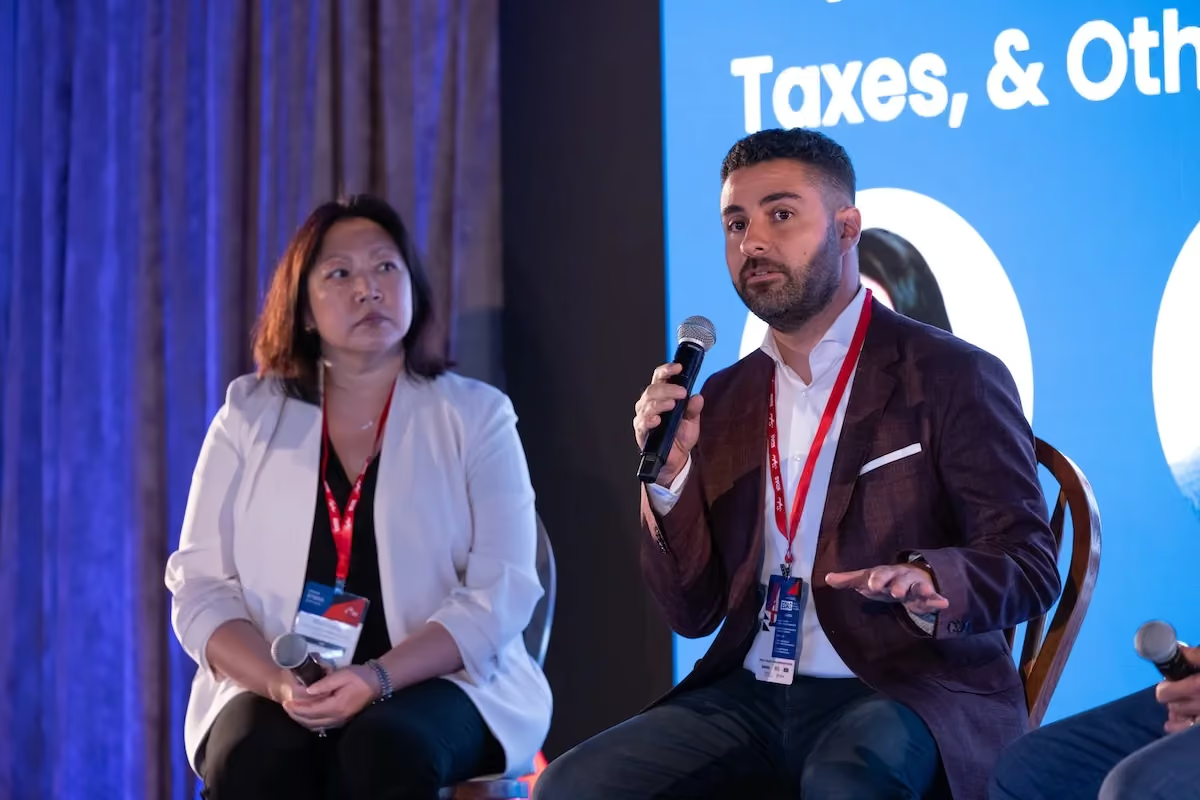

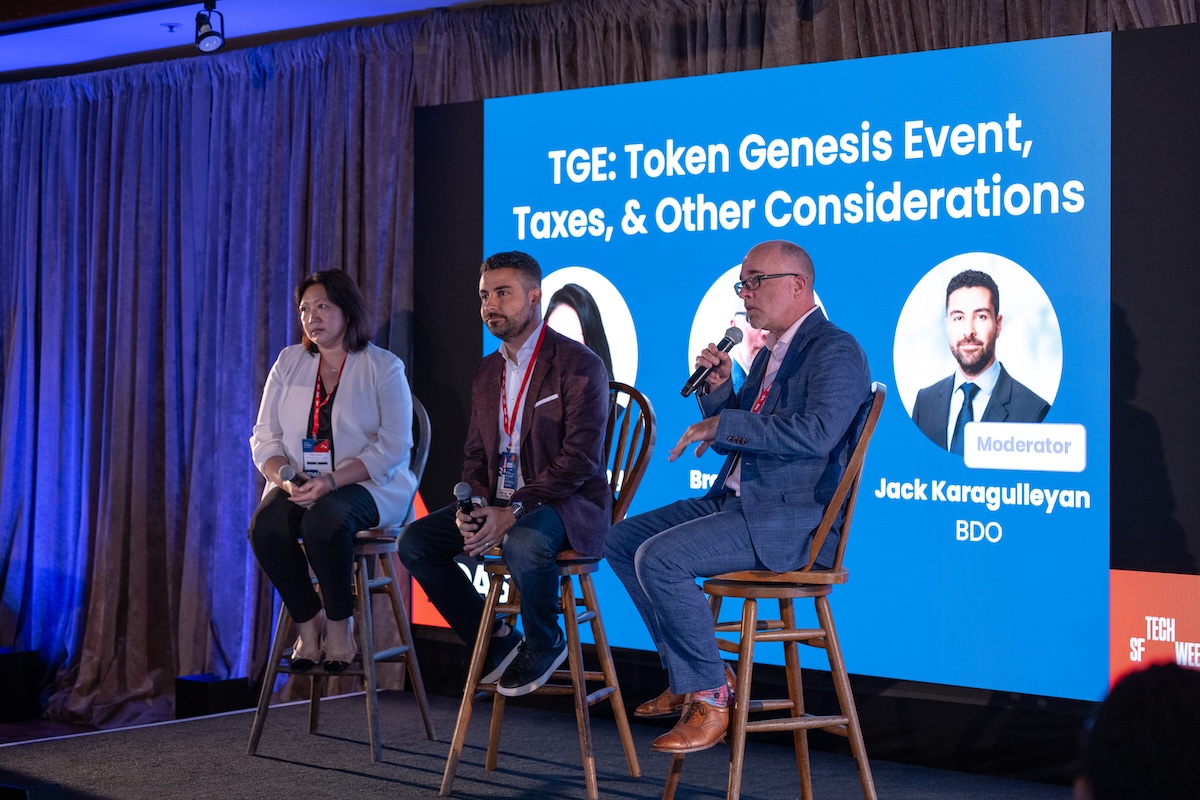
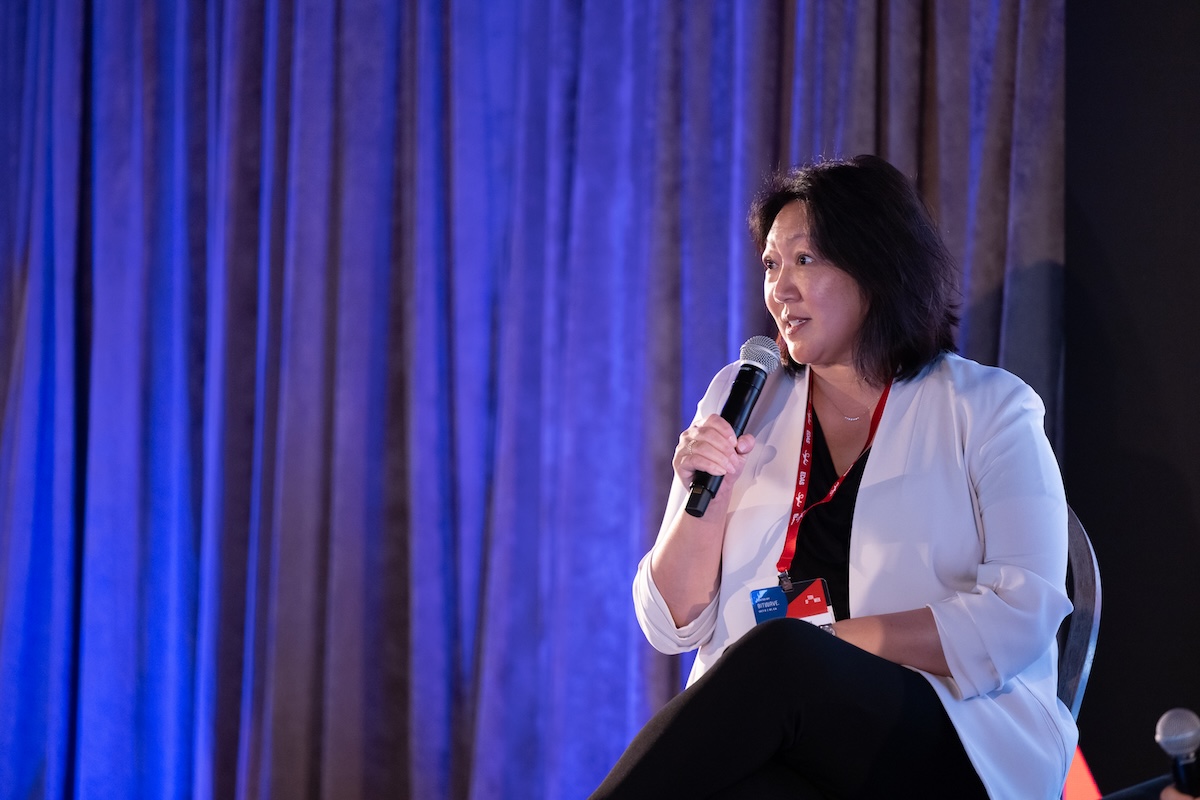
For this end-of-year, tax-focused edition of our EDAS Highlight Series, we’re recapping the session “TGE: Token Genesis Event, Taxes, and Other Considerations” featuring Jack Karagulleyan (BDO), Brandon Boyle (BDO), and Mitzi Chang (Goodwin Procter). This session offered a clear, operator-grade overview of what token launches actually are, why more companies are considering them, and where tax and regulatory risk concentrates today.
Token Genesis Events (TGEs) are having a moment again, although they look very different from the ICO era. But ICOs and tokens are back in the news. SEC chair Paul Atkins recently said that several types of ICOs, or initial coin offerings, should not be considered securities, and therefore outside the Wall Street regulator’s jurisdiction. This could mean we see more TGEs in the future.
Of various categories of tokens, SEC Chair Atkins mentioned three types: network tokens, digital collectibles, and digital tools, which should not be considered securities in and of themselves.
Our Enterprise Digital Asset Summit panel on TGEs’ central message was straightforward: the mechanics of launching and distributing tokens are evolving faster than tax and regulatory frameworks, and the gap between innovation and guidance is where companies can get exposed.
The conversation focused on three practical dimensions:
- What a TGE is and why companies do them
- Tax and structural considerations (especially for US vs offshore launches)
- Regulatory exposures to consider
What a Token Genesis Event Is
A TGE is the moment a company or protocol launches a token on a blockchain network that becomes part of a product, business model, or ecosystem. In practice, TGEs often support one (or more) of these objectives:
- Governance decentralization: enabling token holders to participate in decision-making (the “HOA” analogy: token holders help decide how the ecosystem runs).
- Utility and loyalty mechanics: exchange or platform tokens that unlock benefits like reduced fees, access, or rewards, often tied to user activity and distribution formulas.
- Liquidity and participation expansion: beyond “faster/cheaper” rails, tokenization can broaden access to market participants and liquidity pools.
A useful mental model from the talk: tokens can act like programmable “rights” inside an ecosystem, and the value proposition often comes down to incentives, distribution, and market structure as much as technology.
The Three Most Common Ways TGEs Get Distributed
The panel outlined three primary launch paths:
- Airdrops: tokens distributed to users’ wallets, often based on usage, tenure, transaction behavior, or other eligibility criteria.
- ICOs (revived, but different): not the 2017 playbook. Now there’s more scrutiny, more structured processes, and in some cases, KYC is beginning to show up.
- Private sales: token allocations sold to accredited investors before broader market availability.
The key point for finance and legal stakeholders is that the distribution mechanics of an ICO are not just product decisions; they also drive tax reporting obligations, withholding requirements, and downstream audit complexity.
A Strategic Decision: To Launch in the US or Offshore?
Historically, many projects launched offshore because of US regulatory ambiguity, particularly around securities-law risk. The panel emphasized that posture is changing, and more teams are now asking how to launch in the US, especially when they want to retain more operational control rather than fully decentralizing governance.
Offshore launches can require meaningful operational concessions, such as relinquishing control to foundation structures and navigating cross-border operational complexity.
Separately, the TGE panel mentioned emerging entity structure considerations in the US for certain fact patterns (e.g., Wyoming DAOs; potential nonprofit alignments like 501(c)(4), depending on mission and operations).
But with the SEC chair, Paul Atkins, recently said ICOs, “Those sorts of things would not fall, as we would define it, into the definition of a security.” We might start seeing more token launches onshore.
Tax Reality: The Rules Are Unclear, and the Risk Is Structural
BDO offered the critical reminder that tax authorities globally are still grappling with decentralization, and there is limited battle-tested guidance on many core TGE issues. The practical posture from tax authorities is often: “How do we get enough information to understand what happened, and who owes what?”
A common lifecycle pattern many projects have used:
- US-based development and build-out (white paper/protocol development),
- then a decision point at mainnet/token launch,
- Then use of an offshore foundation (often Cayman) to support the decentralization narrative and reduce “beneficial ownership” arguments.
From a US tax perspective, two themes matter heavily:
- Indicia of ownership and control: whether US persons have shareholder-equivalent rights, distribution rights, or effective control.
- Ongoing operational footprint: whether the foundation is effectively operating in the US (including through agents), which can trigger US tax reporting/withholding obligations and broader exposure.
The operational takeaway: structure and governance are part of the tax risk posture.
Airdrops Have a Specific Pain Point: Withholding and Identification
Jack highlighted an especially acute friction point for US-based launches: airdrops often happen without KYC, which makes traditional withholding mechanics difficult.
This creates a set of challenges (including “backup withholding” considerations) that can make airdrops operationally messy for teams trying to do things “the right way” in the US, particularly under rules that were written long before tokens and blockchain existed.
Regulatory Posture Is Softer, But the “Tax Problem” Remains
Mitzi Chang of Goodwin Procter reinforced why offshore structures became common in the first place: prior SEC enforcement posture and the view that many token issuances/distributions were effectively unregistered securities offerings under tests like Howey (and in some contexts, Reves).
Her key point for 2026 planning was that SEC tone and enforcement risk appear to have softened, and the SEC under Chair Paul Atkins seems to have a more pragmatic stance, at least on some forms of distribution to users where utility and decentralization facts are strong.
But she also emphasized the practical reality many teams are reaching. Regulatory enforcement risk may be down, but tax remains the most persistent and consequential risk area for many token projects.
What to Watch for Year-End
During our panel, several policy and market trends surfaced as “watch items,” especially relevant for year-end planning:
- Potential legislative movement that could change when certain token receipts are taxed (e.g., shifting taxation from receipt to sale for categories like airdrops, and possibly staking/mining in some proposals).
- Continued maturation of RWA tokenization and the operational/legal frameworks required to link digital representation to real-world ownership and enforceability.
- Accelerating crypto M&A, digital asset treasury strategies, reverse mergers, and public-market vehicles that may increase demand for robust compliance infrastructure.
Practical Implications for Enterprise Finance Teams
If you’re planning a token launch, evaluating a token distribution, or supporting a protocol through a TGE, this session points to a clear checklist:
- Treat distribution design (airdrops vs sales) as a tax and reporting design choice, not just a product choice
- Align entity structure, governance, and operating model to your decentralization narrative (if applicable).
- Assume tax authorities will focus on control, agency, and information access, and build defensible processes early.
Token launches and treasury activity create a familiar problem in a new wrapper: high-volume transactions, complex distributions, evolving guidance, and year-end reporting pressure.
Bitwave helps enterprises and digital-asset-native businesses stay audit-ready by bringing rigor to the operational layer, so finance teams can move quickly without sacrificing control. With Bitwave, you can automate and standardize the accounting and reporting workflows that become critical around TGEs, distributions, and multi-wallet activity.
If you’re planning for a 2026 token event, expanding treasury operations, or preparing for year-end close, talk to Bitwave to see how we support digital asset accounting, reconciliation, controls, and reporting at enterprise scale.
FAQs About Edas Highlight Series: Token Genesis Events, Taxes, and What to Know
What a Token Genesis Event Is?
A TGE is the moment a company or protocol launches a token on a blockchain network that becomes part of a product, business model, or ecosystem. In practice, TGEs often support one (or more) of these objectives: Governance decentralization: enabling token holders to participate in decision-making (the “HOA” analogy: token holders help decide how the ecosystem runs).
A Strategic Decision: To Launch in the US or Offshore?
Historically, many projects launched offshore because of US regulatory ambiguity, particularly around securities-law risk. The panel emphasized that posture is changing, and more teams are now asking how to launch in the US, especially when they want to retain more operational control rather than fully decentralizing governance.
What should finance teams know about Tax Reality: The Rules Are Unclear, and the Risk Is Structural?
BDO offered the critical reminder that tax authorities globally are still grappling with decentralization, and there is limited battle-tested guidance on many core TGE issues. The practical posture from tax authorities is often: “How do we get enough information to understand what happened, and who owes what?

Disclaimer: The information provided in this blog post is for general informational purposes only and should not be construed as tax, accounting, or financial advice. The content is not intended to address the specific needs of any individual or organization, and readers are encouraged to consult with a qualified tax, accounting, or financial professional before making any decisions based on the information provided. The author and the publisher of this blog post disclaim any liability, loss, or risk incurred as a consequence, directly or indirectly, of the use or application of any of the contents herein.